Friday, September 2, 2011

Behold the Power of Chesse.


So down here at the Regenerative Design Institute in Bolinas, California we have some goats. We milk them daily and we get a pretty substantial yield. So one of things that we do with our surplus of goat milk is to make goat cheese. Yesterday I made chevre, that classic of classic cheese. So I thought I would share the process.

First thing you need is some goat milk. Luckily here at RDI, we have the aforementioned goats, but perhaps a local dairy could help you out.

I used 3 gallons of milk.
1/4 teaspoon of mesophilic cheese starter
7 drops of rennet

A big pot
Dairy thermometer
Cheesecloth
Strainer
A couple of wooden spoons.

Pretty simple set up.

So you start with your 3 gallons of goat milk in a big pot. Heat it on low until it reaches 85 degrees. Then add the starter. This would be available at a retailer of cheese making supplies. Basically your are inoculating the milk with little microorganisms that love that 85 degree temp. If you raise the temp too high, they will die, so its important to keep an eye on it to make sure it does not overheat.

After an hour, add the rennet. Also available at cheese supply stores. Then its a matter of waiting for the curds to separate from the whey. This can take a few hours. So bake some bread, build a table or something while you are waiting.

After a few hours, take a look in the pot. If the mixture is a thick yogurt like consistency with a light milky water then you are in business. If not, then you might need to add a few more drops of rennet.

The next step is where the actual work comes in to play. First you need to have another big pot or bowl or something that you can place a strainer over. Then lay a square of cheesecloth (a square foot is a good size) over the the strainer. Then you scoop out some of the curds and fill up the cheesecloth. The curds will remain inside the cloth, while the whey will drain into the big pot or bowl. Next, tie up the 4 corners of the cheesecloth complete with curds inside it and hang that on a wooden spoon or something that will span the distance of a large bowl or pot. Basically you are letting the curds dry out and the whey will drip down into a container below. You just keep filling up the cheesecloth in the strainer until there are no curds left in the original pot.

Leave the cheesecloth filled with the curds hanging and straining over night and then come back in the morning. Untie and check it out. You have chevre. Its a good idea to add salt, and feel free to mix it all around with a spoon. It will be fine. I like to add herbs or pepper. Once we made a dessert chevre and a curry chevre, so experimentation is encouraged.

The milky watery stuff left over is the whey, and that can be used for all kinds of fun stuff. Whey soda is very tasty. Check around for some other uses for whey.


So again, pretty simple process, not a lot of materials and not a lot of work and its done in 24 hours. So why is goat cheese so expensive?

Wednesday, August 31, 2011

Things My Family Taught Me

My dad be a gardenin' fool.

I used to watch him from the window of my bedroom as a kid as he struggled to push the tiller through thick wet dirt and cow manure. I used to follow him through the rows of beans and have him show me what was a weed so I could "help" him pull them.

Don't get me wrong - my mom was also involved with our garden adventures. I remember picking and shelling peas with her. I remember being sent to the garden to get lettuce and learning to wash it in the colander with holes punched in it that made the shape of stars.

One of my students recently interviewed me about the passing on of folklore. She had learned that I knew how to can vegetables and wanted to know how I learned. I told her about days of scalding wet heat where the kitchen was steamy and the mason jars filled with zucchini relish and pickled beets lined up in rows to cool. I told her about a freezer filled to the top with bags of veggies from the garden - corn, peas, beans, tomatoes. I told her about going to the root cellar and picking out potatoes and onions for Christmas dinner when the snow was thick on the roof of our log home and the woodstove warmed my hands when I came up from the basement. I told her about how my grandmother would go out wildcrafting, bringing home fiddleback ferns that she would steam and we would eat with butter.

I thought this was a good post to talk about the things we learn and the traditions we keep alive. I see that often these days this kind of endeavor is linked to privilege. I work with people in poverty and it is way cheaper for them to buy a can of beans at the store than to get mason jars and a pressure canner. People who work over 40 hours a week at minimum wage jobs don't have time to be on their knees in the dark soil. That said, sustainability and the ability for communities to feed themselves is part of the key to ending poverty. I feel grateful I am able to take time to garden. I am grateful that my family taught me about food - how to grow it and keep it.

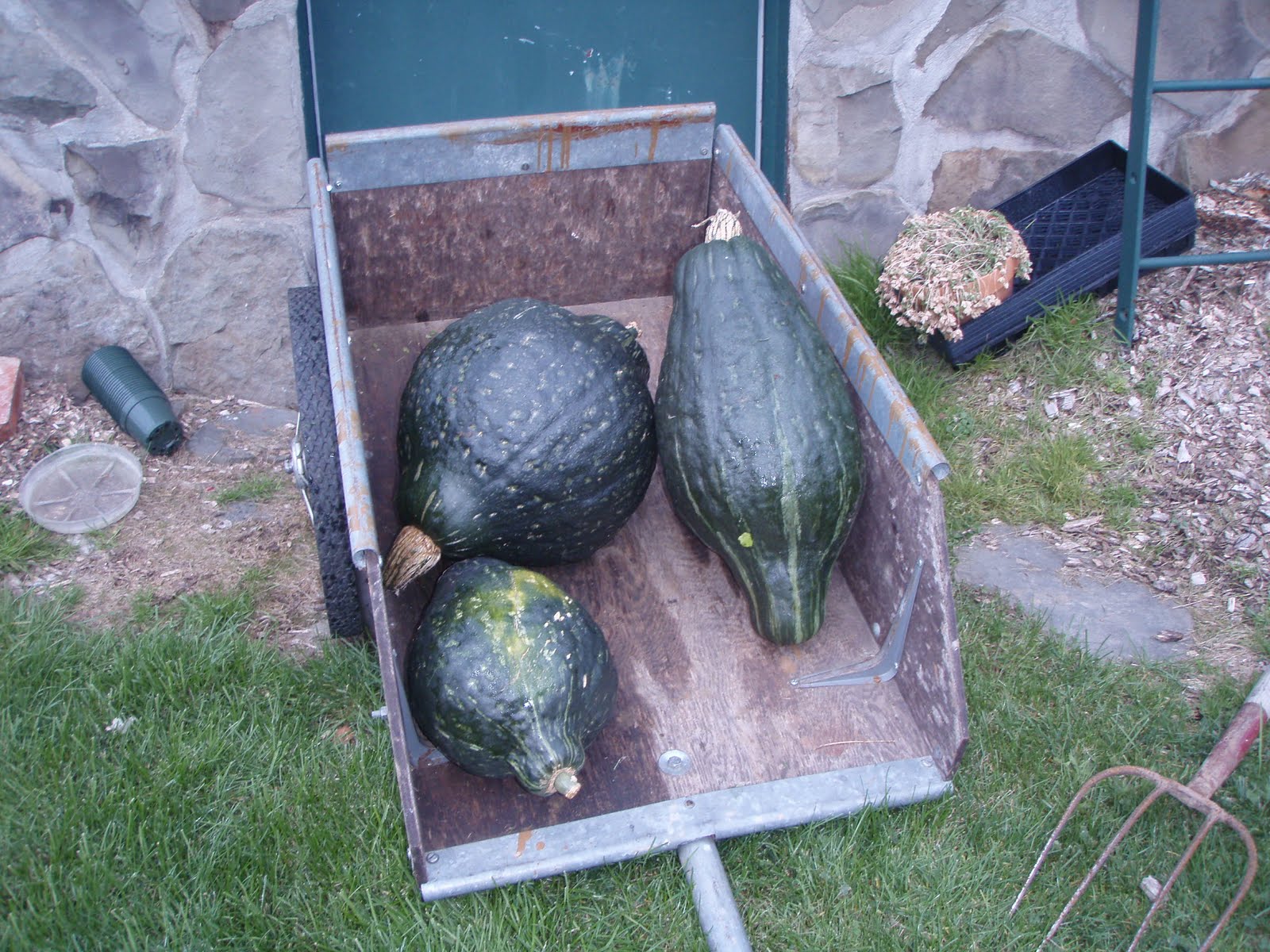
I have pictures my dad sent me of the start of his garden this year. I hope that it is still standing after Hurricane Irene blew through. These days he plants tomatoes, peppers, onions and other things to make and sell salsa. He's very good at it!


OK - these last 2 are pics of some hubbard squashes he grew last year. SOOOO BIG!


If you have garden pics you are proud of, please email them to semiurbanhomesteader@gmail.com and we will post them here!!!

Monday, August 29, 2011

You CAN Teach Old Tomatoes New Tricks

Hey all - I know it's been a looong time. Apologies. Lots has been a-happenin' - one thing is that I have relocated.

Of course not before I planted and nurtured 10 tomato plants.

Let's start with the fact that the sheet mulch from earlier posts did not break down as quickly as hoped, but the tomatoes seemed to do well as long as I kept them well fed with fish fertilizer and old milk. They were smaller sized than I had hoped (the tallest one being about 3' tall), but were producing at a lovely rate that kept me in tomatoey goodness daily without overwhelming me.

But this move...

The person who moved into the duplex behind me is the daughter of the people in the other 1/2, so I hoped perhaps I could leave my babies there and come back to harvest. The folks next door are sooo nice I figured that would work out. But alas - the daughter was planning on taking out all 4 beds and putting in a trampoline (she's 19 so I can't be too upset, but all that work!). So since the tomatoes were going to be ripped out anyhow, I figured I would see if tomatoes that are well established could survive transplantation.

I started by watering them and giving them fertilizer the day before I uprooted them. I also took off all of the fruit - red or green - beforehand. I figured it might fall off anyhow so why not? On the day I made sure that I was going to be able to dig them up and get them back into the ground in less than 30 minutes. I was sure to keep as much soil around the roots as possible, and packed them loosely into tupperware tubs. I put them into my car and covered the windows to avoid burns through the glass. I buried them as deeply as they had been before, staked them well, and gave them more water and fertilizer.

The first two days it seemed touch and go. The plants were severely wilted and sad looking. I watered them every evening, and gave them another feeding. Two weeks later 8 of the 10 are perked up with minimal dead leaves. The other two are yellowing and might die. Am still working on them. Of the 8 that are looking good, 7 are producing more fruit, and 5 have new flowers on them. Not sure how the fruit will be, but I am pleased to know that this is possible if necessary. I don't recommend it!

Sorry for the poor quality photo - the camera is out of batteries


I had a HUGE number of green tomatoes. I have been letting many of them ripen over time, but I did put up three quarts of pickled tomatoes. I used a modified recipe from Joy of Cooking, and used a technique for fridge pickling that I learned on NPR. Here is the recipe:

To make 1 Quart of Bread and Butter Fridge Pickles (I used green tomatoes)

- 1qt. loosely packed veggie you want to pickle
-1/2c. salt
- 1c. white wine vinegar
- 1c. sugar or honey
- 1t. mustard seeds
- 1t. turmeric
- 5-6 cloves or a small cinnamon stick
- 1/2t. celery seeds

I made 3 quarts. I took a large number of green cherry tomatoes and just punctured them with a paring knife to get the brine into the tomato. I also chopped 2qt worth of larger ones into bits.

- Soak the tomatoes overnight in a large bowl with the salt. I filled the bowl with water until the tomatoes were covered and then set a plate on top to hold them under.
- take the tomatoes out and rinse them at least twice
- loosely pack the tomatoes into quart jars (or whatever size you like)
- bring the sugar/honey and vinegar to a boil
- pour the hot mixture into the jar leaving about 1/4 inch at the top
- add turmeric, mustard, cloves/cinnamon, and celery seeds
- screw on lids tightly and turn over a few times to mix in spices
- place in fridge and let sit for two weeks before eating. these should be refrigerated for the duration.

I also added a bit of a twist to two of the jars - one got freshly chopped lemon balm, and another got a sprig of parsley. You could also add garlic if you like (I forgot).

They are tasty!

Monday, May 9, 2011

Recycled Candles Take Two

So I worked at a wilderness therapy program for troubled teens for some years in my life. This is what got me into things like sustainability, herbs, organics, and primitive skills. I loved being self-sustaining in the back country - living out of a backpack, making fire by rubbing sticks together, finding plants to eat in the wild. When I returned to 'civilization' I started growing veggies, making rainwater catchments, and doing a lot of things like I have been blogging about.


When I was working in the field one Christmas, we taught our kids to make candles out of bacon grease using old tuna cans and twisted juniper bark. The candles we made were small and messy, but the kids LOVED them. So when I was cleaning my kitchen this weekend and was looking at the jar of bacon grease sitting on the counter, I remembered this project and decided to embark on a little experiment.


I have a bunch of wicks left over from the recycled candle project I did a couple weeks ago, and I pulled one out and cut it to the right length to stick up out of the grease. I had to use tweezers to get it that far down into the jar. You are looking at a pint mason jar with about 1.5" of grease in it.

I was worried about what might happen when the flame burned down the wick - would the whole thing catch fire and I'd end up with a really awful mess from a bacon bomb? However, the candle burned well, and the worst thing was a slight bacon smell. Since I have no issue with the smell of bacon in my home I figure all is good in the world.

Plus it's really pretty

Sunday, May 8, 2011

Sustainable Sunday: Rogue Hopyard


Well last week I talked about wine, so I decided to go with beer on this fine Mother's day. A lil while back I hit up the Rogue Hopyard with friends for beer, food, and a look at hops in action.

The trip was enjoyable - well off the beaten track in the Willamette Valley (Independence to be exact). We drove in past rows of hop fields with patriotic and maverick names (they boast 42 varieties on site), to the hophouse which sits right next to the Rogue Hop 'n Bed bed and breakfast house. We missed the tour (2pm on Sundays), but were able to stand in the tasting room and enjoy a wide variety of beers and good conversation with the staff.

What I like about Rogue is they do not go for what Michael Pollan dubs "supermarket pastoral" in their advertising or labeling. They grow hops locally, and are committed to things like sustainable farming, but they don't use this as a gimmick to get people to like them. In fact, their website copy is even a bit tongue in cheek about it, stating that they use 'free range' coastal water along with their other ingredients. Though I am the first to shout about sustainability from the rooftops, there is something to be said about not taking things to seriously.

The beers were excellent, including one that had hints of juniper, making me long for the Utah desert sunshine (it was sunny that day though!). With locations up and down the I5 corridor in Oregon and even into California - I say check out the Rogue Nation!

Wednesday, May 4, 2011

Beeswax Wood Finish

So a while back we got a dining room set that is a beautiful oak table and two chairs. It has certainly seen better days, and so I have decided that I am going to spend some time refinishing it. The coffee table extravaganza certainly helped in learning about natural dyes and linseed oil, but I was not convinced that was the route I wanted to go. So...I decided I would refinish another small end table in the house and try out a beeswax finish on it to see how I liked that.


I took the old finish off of the table with an electric sander. You can see here the contrast between the color of the old finish and the color of the wood. I was pretty excited to be able to redo this baby in lighter tones. I also love natural finishes because they do not create a barrier between you and the wood. The wood still breathes and feels like wood when you finish it with natural products.


I went back into "The Natural Paint Book" by Julia Lawless and Lynn Edwards for a recipe. I chose the simplest wax finish, which is just beeswax and a solvent. I went all over the place trying to get citrus solvent, but it is not easy to come by. So I went with turpentine because it is easy to find in small quantities.


I cut the beeswax into chunks using a hammer and screwdriver and put the bits into a glass jar. I made up the same makeshift double boiler I made when I recycled candle wax. I will say that melted beeswax smells divine!!! Sadly, when you mix it with turpentine it does not.


The recipe called for a 2:1 turpentine to wax ratio. I used 8oz turpentine and 4oz wax. The end result was a chunky paste that was smelly and yellow. The turpentine had been in the garage and was cold, and when I poured it into the hot wax there was an instant cooling that caused some chunks. If you wanted to avoid that I would make sure the turpentine is at least at room temperature. I would not heat it though because it is volatile and VERY FLAMMABLE. Please also note the open door in my kitchen that provided ventilation for the project.


I used a rag to apply the waxy paste to the table. I treated the application much like I used to when my dad had me wax the car. I smeared wax on thickly and let it set until it was hard and dry, then buffed it off. The finish brought out the beautiful color of the wood as you can see in these pics.


Because of the turpentine, I left the table in the garage overnight so that it could air out a bit. I then buffed the table one more time with a clean cloth so that it was not sticky. The end result is absolutely beautiful, and the table feels like natural wood as well. If you wanted to, you could do this kind of finish over a stain, OR add pigment to the wax.


As you can see, this table is a small end table, and it took about 6oz of the paste to cover it completely. Know that natural finishes soak into the wood as opposed to varnishes and shellacs that sit on top of it. This means that it takes a bit more volume to coat the wood properly.

Sunday, May 1, 2011

Sustainable Sunday: South Stage Cellars

When visiting House Alive! a few months ago, we dropped in on a local landmark that houses the South State Cellars' wine tasting room. What we ended up with was a chance to support winemakers who practice sustainability, make good wine, and support local business!

Built in 1865, the then private residence of Patrick Ryan has been host to more local businesses than any other building in town. Currently it is the home of South Stage Cellars, a vineyard-based tasting room and wine garden. We sat in the old-world style tasting room and talked with the others there while sampling a series of award-winning wines, and eventually walked away with a bottle of their 2009 Early Muscat, sold on the promise from the woman in the tasting room that it served both as a delightful dessert wine as well as an aromatic white. It felt like a big claim to me and so was intrigued. I was impressed with the quaint, cozy feel of the tasting room along with the rows of medals and awards that lined the wall behind the bar. The 2008 incarnation of the Early Muscat won Best of Show at the 2009 World of Wine Festival.

We were also excited to see how committed South Stage is to supporting the local economy and community. The grapes come from owners Don and Traute Moore’s vineyard, Quail Run, a local 300 acre operation that utilizes no insecticides and utilizes cover crops as a means to enrich the soils. We noted that there were several events aimed at locals providing discounts and entertainment. Our friend Coenraad had been there just the night before performing at a local’s night.


Some weeks later we decided to give our southern belle a try. A pale straw color, I expected something touted as a potential dessert wine to be more syrupy, but it seemed more like an aromatic in the glass. The nose consisted of honey and a tropical fruitiness that we were initially unable to identify along with hints of clove. I found the taste to be powerfully sweet on the tongue with a slight sparkling texture and a lightly bitter finish, almost like grapefruit. Jason noted that he found a “zing” at the top of his palette that was just as much texture as it was flavor. After exploring this further we decided that this was the tropical fruit we’d gotten on the nose – guava. The whole experience was threaded with the light spiciness of clove that carried through from start to finish.

We decided that the claim that this wine could be either a dessert wine or enjoyed by the glass with food stood up to the test. The Early Muscat provided more than enough complexity and crispness to drink chilled with a citrusy piece of fish or a mild Thai curry. However, its bold sweetness and bitterness would make it an excellent complement to dark chocolate or summer fruits. I definitely enjoyed this versatile wine and would recommend it to anyone who enjoys sweet wine with a kick.